Binds and sessions
Transmitter, receiver and transceiver binds, session limits per credential, live session list, disconnections and uptime history.
Give your customers an SMPP endpoint that is secured, monitored and accountable. Auvia accepts binds over plain SMPP or TLS, acknowledges a message only after it is stored, and shows every PDU when something goes wrong.
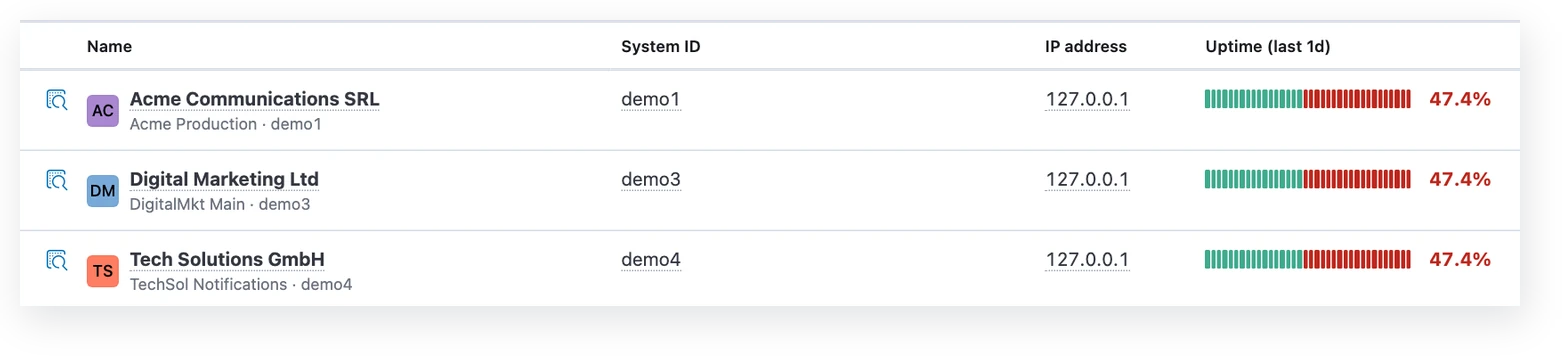
Transmitter, receiver and transceiver binds, session limits per credential, live session list, disconnections and uptime history.
TPS limits per credential and per account, priorities per account and pacing per supplier trunk, so bursts wait in the queue.
submit_sm_resp is sent only after the message is written to the message store. A failed store returns an error, not a lost message.
Up to 20 parts, validated before acknowledgement, reassembled and priced per segment. Retransmitted parts are deduplicated.
Receipts are delivered to the customer bind with bounded retries, so a disconnected client does not pile up failures.
TLS, IP allowlists per credential, automatic IP blocking after repeated failed binds, blocked-IP list in the panel.
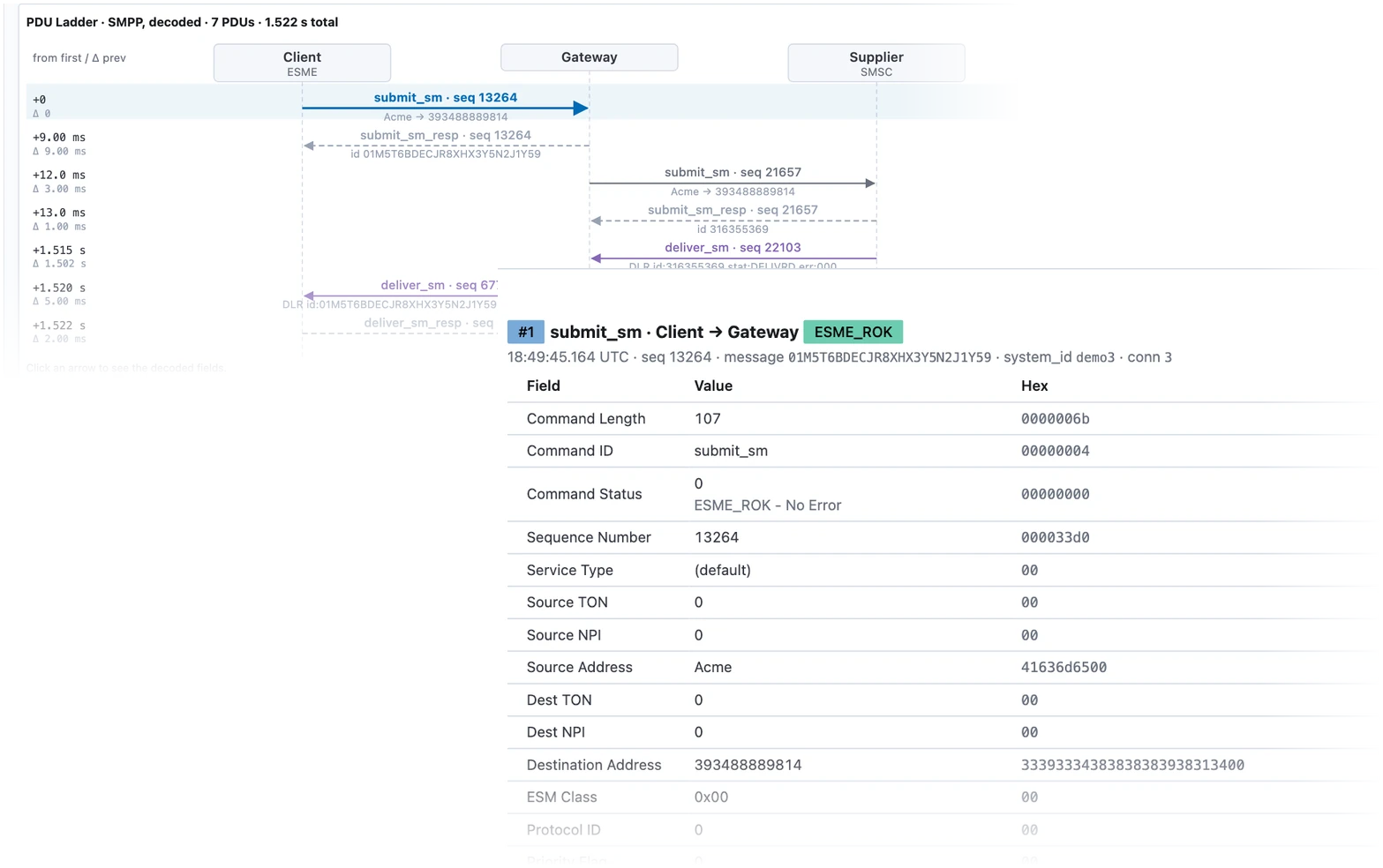
When a customer says a message never arrived, open it and read the exchange: submit_sm from the client, submit_sm to the supplier, deliver_sm back, each field decoded next to its hex.
Connect to suppliers over SMPP 3.4 or 5.0, with TLS. Each trunk shows binds, TPS against its limit, a day of uptime, disconnections and the last error. Trunk changes apply to live sessions without a restart.

Tell us your business type, the protocols towards customers and suppliers, cloud or on-premise, and the capabilities you care about. Our team comes back with a demo on the console or a technical evaluation on your scenario.
sales@auviagateway.com